


 menu


issue contents
October 2026 issue
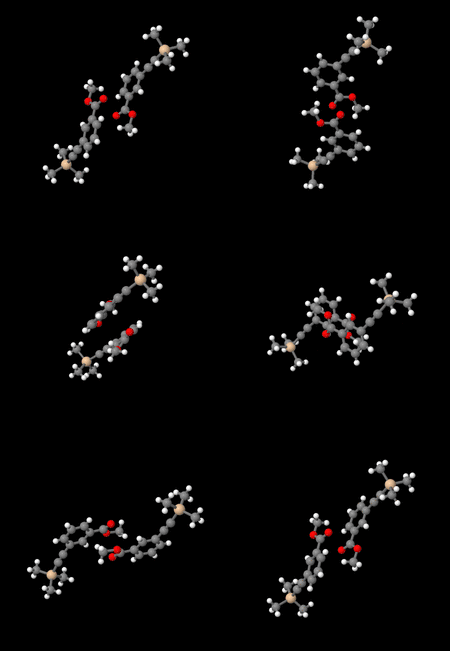
Cover illustration: Methyl 3-[(trimethylsilyl)ethynyl]benzoate, C13H16O2Si, was synthesized via a Sonogashira coupling reaction using cis-[PdCl2 (PPh3)2] and 1 mole % CuI. The two molecules in the unit cell pack utilizing weak intermolecular hydrogen-bonding interactions between carbon H atoms and neighboring oxygen atoms in the methyl benzoate group. See: Lesley, Crundwell & Oliver [IUCrData (2026). 8, x261070].
metal-organic compounds


Download citation


Download citation
Open  access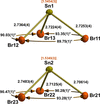
The crystal structure of the title salt comprises [PyH]+ and [SnIIBr3]− ions. The structural parameters of the two cations and two anions in the asymmetric unit are presented and discussed in relation to the values in other compounds. Intermolecular interactions such as tetrel bonds, π–π interactions and N—H⋯Br hydrogen bonds are analysed.
CCDC reference: 2592101
Download citation
Download citation
Open access
access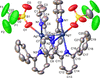
A dinuclear silver(I) complex of 6-phenyl-2,2′:6′,2′′-terpyridine features bridging terpyridine ligands and a short intramolecular Ag⋯Ag contact indicative of an argentophilic interaction.
CCDC reference: 2594042
Download citation
Download citation
Open access
access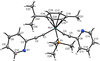
The title complex, [Ru(C7H4N2)2(C10H14)(C3H9P)] or (p-cym)Ru(C2-2py)2(PMe3), where p-cym = η6-1-isopropyl-4-methylbenzene and C2-2py = η1-C-pyridin-2-ylethynide, comprises a pseudo-octahedral RuII atom with p-cym occupying one face of the octahedron and the other face comprised of monodentate PMe3 and two η1-C2-2py ligands. In the crystal, hydrogen bonding involving one C—H donor and one nitrogen acceptor from each pyridine ring generates dimers propagating along the a-axis direction via supporting C—H⋯π interactions.
CCDC reference: 2594178
Download citation
Download citation
Open access
access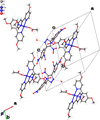
The complex cation, with a coordination environment of the CuII atom intermediate between square-pyramidal and trigonal-bipyramidal, crystallizes with a bulky pyrazolato anion and partly disordered solvent molecules.
CCDC reference: 2581462
Download citation
Download citation
Open access
access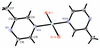
In the title polymer, mononuclear complexes are linked through Cu⋯Br contacts, nearly perpendicular to the Cu coordination plane.
CCDC reference: 2595817
Download citation
Download citation
Open access
access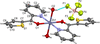
The ZnII atom in the title complex cation (site symmetry 1) shows a pseudo-octahedral coordination by two aqua ligands and two chelating ligands bound through the carbonyl O and pyridyl N atoms, which is consistent with other late first-row transition-metal structures of this ligand with CoII, NiII, and CuII.
CCDC reference: 2593362
Download citation
Download citation
Open access
access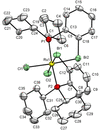
The title RuII complex crystallizes with two and a half molecules (Z′ = 5/2) plus four molecules of methanol solvent in the asymmetric unit.
CCDC reference: 2596337
organic compounds
Download citation
Download citation
Open access
access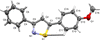
In the title compound, the dihedral angles between the central isothiazole ring and pendant phenyl and p-methoxyphenyl rings are 41.57 (15) and 4.63 (13)°, respectively. In the extended structure, weak C—H⋯π interactions may help to consolidate the packing.
CCDC reference: 2577952
Download citation
Download citation
Open access
access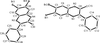
The title compound was synthesized using the acid catalyst NH4HF2 in a water/methanol solution.
CCDC reference: 2593016
Download citation
Download citation
Open access
access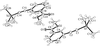
The title compound was synthesized via a Sonogashira coupling reaction using cis-[PdCl2 (PPh3)2] and 1 mole % CuI. The two molecules in the unit cell pack utilizing weak intermolecular hydrogen-bonding interactions between carbon H atoms and neighboring oxygen atoms in the methyl benzoate group.
CCDC reference: 2595593
Download citation
Download citation
Open access
access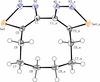
The complete molecule of the title compound is generated by a crystallographic twofold axis: the almost planar 1,2,3-selenadiazole ring and its symmetry-generated partner are annulated to a cyclodeca-1,3-diene ring. Their dihedral angle amounts to 88.4 (2)° and the conformation of the hexamethylene chain is mostly staggered (gauche) except for a near-anti arrangement in the middle.
CCDC reference: 2596883
Download citation
Download citation
Open access
access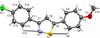
In the title compound, the dihedral angles between the central isothiazole ring and pendant p-methoxyphenyl and p-chlorophenyl rings are 19.30 (19) and 13.8 (2)°, respectively. The molecule exhibits short intramolecular C—H⋯S and C—H⋯N interactions, each generating an S(5) ring motif.
CCDC reference: 2158969
Download citation
Download citation
Open access
access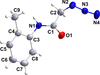
In the title molecule, the inner C—N—C—C portion is almost planar and the phenyl ring and azide group are rotated to be well out of this plane. In the crystal, N—H⋯O and C—H⋯O hydrogen bonds plus C—H⋯π(ring) interactions form chains of molecules extending along the a-axis direction.
CCDC reference: 2594679
Download citation
Download citation
Open access
access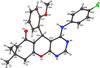
The title chromeno[2,3-d]pyrimidine derivative forms a supramolecular chain in the crystal.
CCDC reference: 2594290
Download citation
Download citation
Open access
access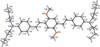
The title compound was prepared via a Horner olefination reaction. Contrary to the previous structure, in which the complete molecule was generated by inversion symmetry and displayed unreasonable geometrical features, the molecule has C1 symmetry and the dihedral angles between the central and peripheral aromatic rings are 39.29 (9) and 18.95 (9)°. A weak C—H⋯π interaction occurs in the extended structure.
CCDC reference: 2597963
Download citation
Download citation
Open access
access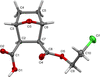
Single-step anhydride ring opening of norcantharidin with 2-chloroethanol affords a versatile advanced intermediate for subsequent functionalization, providing a strategic platform for exploring interactions within unique regions of the phosphoprotein phosphatase 5 (PP5) active site. Steric crowding leads to a strained C—C—C angle involving the ester carbon atom.
CCDC reference: 2598603
Download citation
Download citation
Open access
access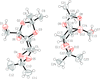
The crystal structure of 2,3:4,5-di-O-isopropylidene-β-L-fructopyranose is reported and compared with two previous determinations of the corresponding D-enantiomer. In the crystal, the two independent molecules are linked separately by O—H⋯O hydrogen bonds, forming cyclic tetrameric assemblies.
CCDC reference: 2597473