

 menu


organic compounds
 | IUCrDATA |
 access
5-(4-Methoxyphenyl)-3-phenylisothiazole

aDepartment of Chemistry, BMS Institute of Technology & Management, Autonomous under Visvesvaraya Technological University, Avalahalli, Yelahanka, Bengaluru 560064, Karnataka, India, bDepartment of Microbiology, Krupanidhi Degree College, Bangalore, Karnataka 560035, India, cDepartment of Physics, Nitte Meenakshi Institute of Technology, Nitte (Deemed to be University), Bengaluru 560 064, Karnataka, India, and dResearch Center, Department of Physics, Government Engineering College, Bedarapura, Chamarajanagara 571313, Karnataka, India
*Correspondence e-mail: [email protected], [email protected]
In the title compound, C16H13NOS, the dihedral angles between the central isothiazole ring and pendant phenyl and p-methoxyphenyl rings are 41.57 (15) and 4.63 (13)°, respectively. In the extended structure, weak C—H⋯π interactions may help to consolidate the packing.
Keywords: isothiazole; dihedral angle; crystal structure.
CCDC reference: 2577952
Structure description
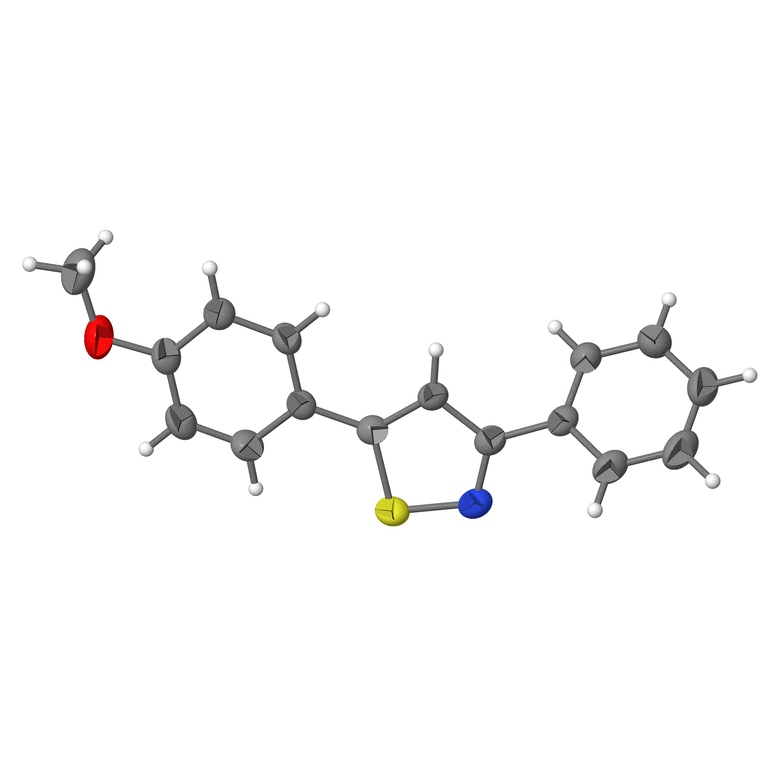
The title compound, C16H13NOS (2), crystallizes with one molecule in the asymmetric unit (Fig. 1 ) in space group P21. The dihdral angles between the central C1–C3/N1/S1 isothiazole ring and pendant C4–C9 phenyl and C10–C15 p-methoxybenzene rings are 41.57 (15) and 4.63 (13)°, respectively. This suggests the possibility of enhanced conjugation between the C1 and C10 rings, but the C1—C10 and C3—C4 bond lengths of 1.471 (3) and 1.474 (4) Å, respectively, are almost identical. A short intramolecular C11—H11⋯S1 contact (Table 1) occurs. Otherwise, the bond lengths and angles of 2 are within the ranges reported for related structures in the literature (Akkurt et al., 2015; Sreenatha et al., 2018, 2021; Sukhonosova et al., 2016; Meundaeng et al., 2019).
|
 ; (ii)
 ; (iii)
 .
 | Figure 1 The molecular structure of 2 with displacement ellipsoids drawn at the 50% probability level. The short C—H⋯S contact is shown as a dashed line. |
In the extended structure of 2, weak C—H⋯π interactions (Table 1) may help to establish the packing (Fig. 2), with each ring accepting one such interaction.
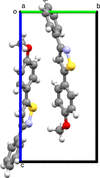 | Figure 2 The packing of 2 viewed along the crystallographic a axis. |
Synthesis and crystallization
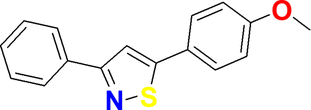
The title compound was prepared by the literature method (Fig. 3) (Zhang et al. 2021) and 0.5 g of it was dissolved in 5 ml of N,N-dimethlformamide and was allowed to undergo slow evaporation to form colourless blocks of 2.
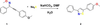 | Figure 3 Synthesis scheme of the title compound. |
Refinement
Crystal data, data collection and structure details are summarized in Table 2.
|
Structural data
CCDC reference: 2577952
contains datablock I. DOI: https://doi.org/10.1107/S2414314626010151/hb4573sup1.cif
Structure factors: contains datablock I. DOI: https://doi.org/10.1107/S2414314626010151/hb4573Isup2.hkl
Supporting information file. DOI: https://doi.org/10.1107/S2414314626010151/hb4573Isup3.cml
| C16H13NOS | F(000) = 280 |
| Mr = 267.33 | Dx = 1.340 Mg m−3 |
| Monoclinic, P21 | Mo Kα radiation, λ = 0.71073 Å |
| a = 6.0239 (2) Å | Cell parameters from 40942 reflections |
| b = 7.4924 (2) Å | θ = 3.1–30.5° |
| c = 14.7003 (5) Å | µ = 0.23 mm−1 |
| β = 92.779 (1)° | T = 298 K |
| V = 662.70 (4) Å3 | Block, colourless |
| Z = 2 | 0.31 × 0.28 × 0.23 mm |
| Bruker SMART APEX diffractometer | Rint = 0.103 |
| Radiation source: graphite | θmax = 30.5°, θmin = 3.1° |
| 40942 measured reflections | h = −8→8 |
| 4059 independent reflections | k = −10→10 |
| 3351 reflections with I > 2σ(I) | l = −20→20 |
| Refinement on F2 | Hydrogen site location: inferred from neighbouring sites |
| Least-squares matrix: full | H-atom parameters constrained |
| R[F2 > 2σ(F2)] = 0.047 | w = 1/[σ2(Fo2) + (0.0801P)2] where P = (Fo2 + 2Fc2)/3 |
| wR(F2) = 0.130 | (Δ/σ)max = 0.001 |
| S = 1.01 | Δρmax = 0.34 e Å−3 |
| 4059 reflections | Δρmin = −0.23 e Å−3 |
| 173 parameters | Absolute structure: Flack x determined using 1295 quotients [(I+)-(I-)]/[(I+)+(I-)] (Parsons et al., 2013) |
| 1 restraint | Absolute structure parameter: 0.13 (5) |
Geometry. All esds (except the esd in the dihedral angle between two l.s. planes) are estimated using the full covariance matrix. The cell esds are taken into account individually in the estimation of esds in distances, angles and torsion angles; correlations between esds in cell parameters are only used when they are defined by crystal symmetry. An approximate (isotropic) treatment of cell esds is used for estimating esds involving l.s. planes. |
Refinement. Hydrogen atoms were placed in the calculated positions and refined as riding: C—H = 0.93Å with Uiso(H) = 1.2Ueq(C) for aromatic H atoms and C—H = 0.96 Å with Uiso(H) = 1.5Ueq(C) for methyl H atoms. |
| x | y | z | Uiso*/Ueq | ||
| O1 | 0.4874 (4) | 0.6019 (3) | 0.75885 (14) | 0.0623 (6) | |
| S1 | −0.10260 (11) | 0.66085 (10) | 0.36254 (5) | 0.0505 (2) | |
| N1 | −0.0930 (4) | 0.6076 (4) | 0.25432 (17) | 0.0473 (6) | |
| C1 | 0.1545 (4) | 0.5777 (3) | 0.39509 (17) | 0.0355 (5) | |
| C2 | 0.2470 (4) | 0.5106 (3) | 0.31860 (17) | 0.0369 (5) | |
| C3 | 0.1002 (4) | 0.5291 (3) | 0.24041 (17) | 0.0375 (5) | |
| C4 | 0.1477 (4) | 0.4669 (3) | 0.14826 (17) | 0.0391 (5) | |
| C5 | 0.3554 (5) | 0.4910 (5) | 0.11364 (19) | 0.0482 (6) | |
| C6 | 0.3930 (6) | 0.4388 (6) | 0.0261 (2) | 0.0627 (9) | |
| C7 | 0.2257 (6) | 0.3597 (5) | −0.0282 (2) | 0.0643 (10) | |
| C8 | 0.0206 (6) | 0.3312 (5) | 0.0068 (3) | 0.0598 (8) | |
| C9 | −0.0196 (5) | 0.3850 (4) | 0.0941 (2) | 0.0490 (7) | |
| C10 | 0.2439 (4) | 0.5804 (3) | 0.49001 (17) | 0.0351 (5) | |
| C11 | 0.1298 (5) | 0.6657 (4) | 0.55817 (19) | 0.0461 (6) | |
| C12 | 0.2156 (5) | 0.6693 (5) | 0.64660 (19) | 0.0503 (6) | |
| C13 | 0.4162 (5) | 0.5883 (4) | 0.66996 (18) | 0.0430 (6) | |
| C14 | 0.5328 (5) | 0.5032 (4) | 0.60302 (18) | 0.0427 (6) | |
| C15 | 0.4457 (5) | 0.4996 (4) | 0.51409 (18) | 0.0403 (5) | |
| C16 | 0.6838 (8) | 0.5155 (6) | 0.7883 (2) | 0.0706 (10) | |
| H2 | 0.387587 | 0.459462 | 0.318032 | 0.044* | |
| H5 | 0.469362 | 0.542442 | 0.149633 | 0.058* | |
| H6 | 0.532215 | 0.456678 | 0.002941 | 0.075* | |
| H7 | 0.251766 | 0.326248 | −0.087616 | 0.077* | |
| H8 | −0.091138 | 0.275419 | −0.028633 | 0.072* | |
| H9 | −0.158997 | 0.366739 | 0.117046 | 0.059* | |
| H11 | −0.005761 | 0.720686 | 0.543607 | 0.055* | |
| H12 | 0.137634 | 0.726921 | 0.691119 | 0.060* | |
| H14 | 0.668691 | 0.449069 | 0.617911 | 0.051* | |
| H15 | 0.523906 | 0.441921 | 0.469656 | 0.048* | |
| H16A | 0.665401 | 0.388862 | 0.781437 | 0.106* | |
| H16B | 0.717252 | 0.543204 | 0.851271 | 0.106* | |
| H16C | 0.803493 | 0.555074 | 0.752536 | 0.106* |
| U11 | U22 | U33 | U12 | U13 | U23 | |
| O1 | 0.0806 (16) | 0.0688 (15) | 0.0369 (10) | 0.0052 (13) | −0.0040 (10) | −0.0104 (10) |
| S1 | 0.0416 (3) | 0.0599 (4) | 0.0499 (4) | 0.0159 (3) | 0.0029 (3) | −0.0015 (3) |
| N1 | 0.0395 (12) | 0.0548 (14) | 0.0470 (13) | 0.0073 (10) | −0.0044 (10) | 0.0051 (10) |
| C1 | 0.0358 (11) | 0.0307 (11) | 0.0401 (12) | 0.0005 (9) | 0.0014 (9) | 0.0026 (10) |
| C2 | 0.0332 (11) | 0.0390 (12) | 0.0382 (12) | 0.0029 (9) | −0.0017 (9) | −0.0004 (10) |
| C3 | 0.0361 (12) | 0.0353 (11) | 0.0408 (13) | −0.0026 (9) | −0.0020 (10) | 0.0030 (9) |
| C4 | 0.0394 (13) | 0.0386 (12) | 0.0387 (13) | 0.0019 (10) | −0.0059 (10) | 0.0020 (9) |
| C5 | 0.0391 (14) | 0.0637 (17) | 0.0414 (14) | 0.0005 (12) | −0.0032 (11) | −0.0032 (13) |
| C6 | 0.0483 (18) | 0.091 (3) | 0.0487 (17) | 0.0113 (17) | 0.0045 (14) | −0.0061 (16) |
| C7 | 0.067 (2) | 0.082 (2) | 0.0428 (16) | 0.0203 (18) | −0.0066 (14) | −0.0188 (16) |
| C8 | 0.0622 (19) | 0.0598 (19) | 0.0552 (17) | 0.0033 (16) | −0.0200 (15) | −0.0146 (15) |
| C9 | 0.0443 (15) | 0.0497 (15) | 0.0518 (16) | −0.0033 (12) | −0.0106 (12) | −0.0038 (12) |
| C10 | 0.0373 (12) | 0.0319 (10) | 0.0364 (11) | −0.0007 (9) | 0.0048 (9) | −0.0018 (9) |
| C11 | 0.0453 (13) | 0.0452 (13) | 0.0480 (14) | 0.0094 (13) | 0.0048 (10) | −0.0081 (12) |
| C12 | 0.0567 (16) | 0.0499 (15) | 0.0453 (14) | 0.0038 (15) | 0.0111 (12) | −0.0114 (13) |
| C13 | 0.0538 (15) | 0.0388 (12) | 0.0366 (12) | −0.0044 (11) | 0.0049 (11) | −0.0038 (10) |
| C14 | 0.0434 (14) | 0.0435 (13) | 0.0412 (13) | 0.0047 (11) | 0.0009 (11) | −0.0016 (11) |
| C15 | 0.0426 (14) | 0.0428 (13) | 0.0361 (12) | 0.0045 (11) | 0.0062 (10) | −0.0037 (10) |
| C16 | 0.087 (3) | 0.078 (2) | 0.0453 (17) | 0.003 (2) | −0.0114 (17) | 0.0013 (17) |
| S1—N1 | 1.644 (3) | C15—H15 | 0.9300 |
| S1—C1 | 1.716 (2) | C14—H14 | 0.9300 |
| O1—C13 | 1.359 (3) | C12—H12 | 0.9300 |
| O1—C16 | 1.399 (5) | C5—C4 | 1.385 (4) |
| N1—C3 | 1.329 (4) | C5—C6 | 1.374 (5) |
| C1—C2 | 1.374 (4) | C5—H5 | 0.9300 |
| C1—C10 | 1.471 (3) | C4—C9 | 1.396 (4) |
| C3—C2 | 1.423 (3) | C9—C8 | 1.378 (5) |
| C3—C4 | 1.474 (4) | C9—H9 | 0.9300 |
| C10—C15 | 1.389 (4) | C7—C8 | 1.378 (6) |
| C10—C11 | 1.397 (4) | C7—C6 | 1.387 (5) |
| C2—H2 | 0.9300 | C7—H7 | 0.9300 |
| C11—C12 | 1.376 (4) | C6—H6 | 0.9300 |
| C11—H11 | 0.9300 | C8—H8 | 0.9300 |
| C13—C12 | 1.381 (4) | C16—H16A | 0.9600 |
| C13—C14 | 1.391 (4) | C16—H16B | 0.9600 |
| C15—C14 | 1.385 (4) | C16—H16C | 0.9600 |
| N1—S1—C1 | 96.22 (12) | C13—C12—C11 | 120.7 (3) |
| C13—O1—C16 | 119.1 (3) | C13—C12—H12 | 119.6 |
| C3—N1—S1 | 109.17 (18) | C11—C12—H12 | 119.6 |
| C2—C1—C10 | 129.6 (2) | C4—C5—C6 | 120.0 (3) |
| C2—C1—S1 | 107.52 (18) | C4—C5—H5 | 120.0 |
| C10—C1—S1 | 122.92 (19) | C6—C5—H5 | 120.0 |
| N1—C3—C2 | 115.7 (2) | C5—C4—C9 | 119.2 (3) |
| N1—C3—C4 | 119.5 (2) | C5—C4—C3 | 121.1 (2) |
| C2—C3—C4 | 124.8 (2) | C9—C4—C3 | 119.7 (3) |
| C15—C10—C11 | 118.2 (2) | C8—C9—C4 | 120.3 (3) |
| C15—C10—C1 | 120.7 (2) | C8—C9—H9 | 119.8 |
| C11—C10—C1 | 121.1 (2) | C4—C9—H9 | 119.8 |
| C1—C2—C3 | 111.4 (2) | C8—C7—C6 | 119.4 (3) |
| C1—C2—H2 | 124.3 | C8—C7—H7 | 120.3 |
| C3—C2—H2 | 124.3 | C6—C7—H7 | 120.3 |
| C12—C11—C10 | 120.7 (3) | C5—C6—C7 | 120.8 (3) |
| C12—C11—H11 | 119.6 | C5—C6—H6 | 119.6 |
| C10—C11—H11 | 119.6 | C7—C6—H6 | 119.6 |
| O1—C13—C12 | 115.9 (3) | C9—C8—C7 | 120.2 (3) |
| O1—C13—C14 | 124.6 (3) | C9—C8—H8 | 119.9 |
| C12—C13—C14 | 119.4 (2) | C7—C8—H8 | 119.9 |
| C10—C15—C14 | 121.3 (2) | O1—C16—H16A | 109.5 |
| C10—C15—H15 | 119.4 | O1—C16—H16B | 109.5 |
| C14—C15—H15 | 119.4 | H16A—C16—H16B | 109.5 |
| C13—C14—C15 | 119.7 (3) | O1—C16—H16C | 109.5 |
| C13—C14—H14 | 120.1 | H16A—C16—H16C | 109.5 |
| C15—C14—H14 | 120.1 | H16B—C16—H16C | 109.5 |
| C1—S1—N1—C3 | −0.5 (2) | O1—C13—C14—C15 | −179.1 (3) |
| N1—S1—C1—C2 | 0.9 (2) | C12—C13—C14—C15 | −0.5 (4) |
| N1—S1—C1—C10 | −177.9 (2) | C10—C15—C14—C13 | 0.4 (4) |
| S1—N1—C3—C2 | −0.1 (3) | O1—C13—C12—C11 | 179.1 (3) |
| S1—N1—C3—C4 | 179.4 (2) | C14—C13—C12—C11 | 0.4 (5) |
| C2—C1—C10—C15 | −3.4 (4) | C10—C11—C12—C13 | −0.2 (5) |
| S1—C1—C10—C15 | 175.1 (2) | C6—C5—C4—C9 | 1.7 (5) |
| C2—C1—C10—C11 | 175.9 (3) | C6—C5—C4—C3 | −177.2 (3) |
| S1—C1—C10—C11 | −5.5 (4) | N1—C3—C4—C5 | 138.5 (3) |
| C10—C1—C2—C3 | 177.7 (2) | C2—C3—C4—C5 | −42.1 (4) |
| S1—C1—C2—C3 | −1.1 (3) | N1—C3—C4—C9 | −40.4 (4) |
| N1—C3—C2—C1 | 0.8 (3) | C2—C3—C4—C9 | 139.0 (3) |
| C4—C3—C2—C1 | −178.6 (2) | C5—C4—C9—C8 | −0.9 (4) |
| C15—C10—C11—C12 | 0.0 (5) | C3—C4—C9—C8 | 178.0 (3) |
| C1—C10—C11—C12 | −179.3 (3) | C4—C5—C6—C7 | −0.8 (6) |
| C16—O1—C13—C12 | 176.8 (3) | C8—C7—C6—C5 | −0.9 (6) |
| C16—O1—C13—C14 | −4.6 (5) | C4—C9—C8—C7 | −0.8 (5) |
| C11—C10—C15—C14 | −0.2 (4) | C6—C7—C8—C9 | 1.7 (6) |
| C1—C10—C15—C14 | 179.2 (2) |
| Cg1, Cg2 and Cg3 are the centroids of the C1–C3/N1/S1, C4–C9 and C10–C15 rings, respectively. |
| D—H···A | D—H | H···A | D···A | D—H···A |
| C11—H11···S1 | 0.93 | 2.73 | 3.137 (3) | 107 |
| C8—H8···Cg2i | 0.93 | 2.82 | 3.503 (4) | 132 |
| C12—H12···Cg1ii | 0.93 | 2.88 | 3.542 (4) | 129 |
| C15—H15···Cg3iii | 0.93 | 2.92 | 3.688 (3) | 140 |
| Symmetry codes: (i) −x, y−1/2, −z; (ii) −x, y+1/2, −z+1; (iii) −x+1, y−1/2, −z+1. |
Acknowledgements
The authors thank BMSIT&M, Bengaluru and Govt. Engineering College, Chamarajanagara, for laboratory support.
References
 Akkurt, M., Smolenski, V. A., Mohamed, S. K., Jasinski, J. P., Hassan, A. A. & Albayati, M. R. (2015). Acta Cryst. E71, o776–o777. CSD CrossRef IUCr Journals Google Scholar
Bruker (2012). APEX and SAINT. Bruker AXS Inc., Madison, Wisconsin, USA. Google Scholar
Meundaeng, N., Rujiwatra, A. & Prior, T. J. (2019). Acta Cryst. E75, 185–188. CrossRef IUCr Journals Google Scholar
Parsons, S., Flack, H. D. & Wagner, T. (2013). Acta Cryst. B69, 249–259. Web of Science CSD CrossRef CAS IUCr Journals Google Scholar
Sheldrick, G. M. (2015a). Acta Cryst. A71, 3–8. Web of Science CrossRef IUCr Journals Google Scholar
Sheldrick, G. M. (2015b). Acta Cryst. C71, 3–8. Web of Science CrossRef IUCr Journals Google Scholar
Spek, A. L. (2009). Acta Cryst. D65, 148–155. Web of Science CrossRef CAS IUCr Journals Google Scholar
Sreenatha, N. R., Jeevan Chakravarthy, A. S., Lakshminarayana, B. N. & Hariprasad, S. (2021). J. Mol. Struct. 1225, 129116, 1–8. Google Scholar
Sreenatha, N. R., Lakshminarayana, B. N., Ganesha, D. P. & Gnanendra, C. R. (2018). Acta Cryst. E74, 1451–1454. Web of Science CSD CrossRef IUCr Journals Google Scholar
Sukhonosova, E. V., Sokov, S. A., Ostapenko, G. I., Bunev, A. S., Dorovatovskii, P. V., Zubavichus, Y. V. & Khrustalev, V. N. (2016). Acta Cryst. E72, 1321–1325. CrossRef IUCr Journals Google Scholar
Zhang, Z.-Z., Chen, R., Zhang, X.-H. & Zhang, X.-G. (2021). J. Org. Chem. 86, 636–642. Google Scholar
This is an open-access article distributed under the terms of the Creative Commons Attribution (CC-BY) Licence, which permits unrestricted use, distribution, and reproduction in any medium, provided the original authors and source are cited.
| IUCrDATA |